

I Used Pomelli by Google Labs for the First Time for Dzinepixel’s Business DNA: Here’s My Honest Take as a Digital Marketer
April 21, 2026
While AI has automated nearly everything, you still need to do the basics. Upload your brand kit, set your colour palette, experiment with prompt engineering, and so on. And honestly, I am not complaining. That’s the bare minimum you can do as a marketer, designer, or content creator. It shows you care about your craft.
But things get complicated fast when you are handling multiple clients. Each with their own brand voice, visual identity, and content calendar.
To address this, we have branding and design tools like Canva and Adobe. Both built to bring consistency across campaigns. But fresh out of the box, we now have Pomelli by Google Labs. And the internet cannot stop talking about it, especially its Business DNA feature that promises to read your brand automatically.
So I thought, why not try it by myself on a real agency brand, from India, with real client context, rather watching a walkthrough or read a press release.
In this blog, I break down what Pomelli’s Business DNA actually delivers, how it holds up against Canva and Adobe, whether it lives up to the hype, and most importantly. Does it have the potential to replace Canva for working marketers and agencies?
What Is Pomelli?
Launched in October 2025 by Google Labs and Google DeepMind, Pomelli is a free AI marketing tool designed for one specific problem, which is to create brand-consistent content without needing a designer, a brand guidelines document, or a Canva Pro subscription.
After an initial beta limited to four English-speaking countries, Google officially launched Pomelli in India on February 25, 2026, and expanded it to 170+ countries on March 9, 2026. If you are in India, you do not need a VPN anymore. Just visit labs.google.com/pomelli and sign in with your Google account.
I tested it with Dzinepixel. Here’s what I found : the good, the frustrating, and the parts nobody is talking about.
How Pomelli Actually Works?
The workflow is a clean three-step process:
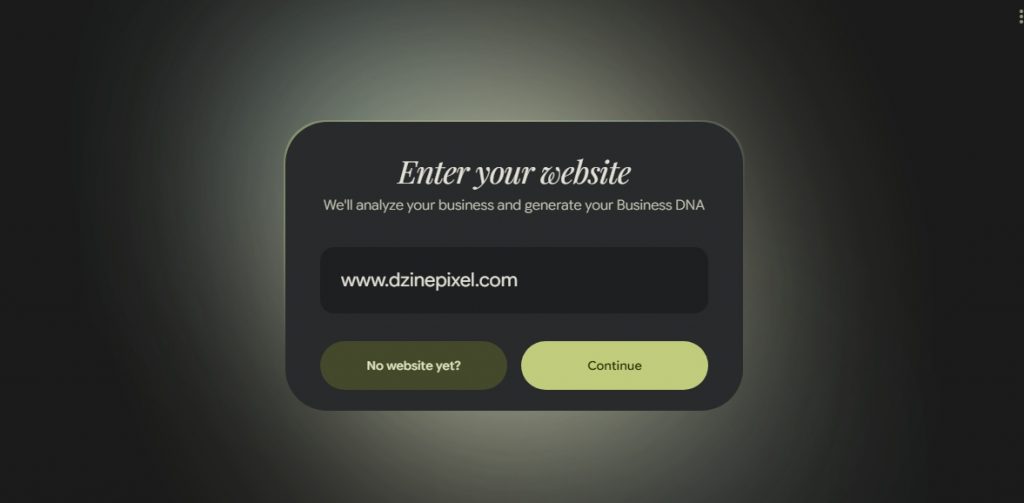
Step 1: Drop your URL
Pomelli scans your live website. On the first run, this takes anywhere from 30 seconds to 8 minutes depending on site size.
Step 2: It builds your Business DNA.
This is the core of the product. Pomelli extracts your color palette, typography, image style, tone of voice, sentence structure, and brand messaging patterns automatically.
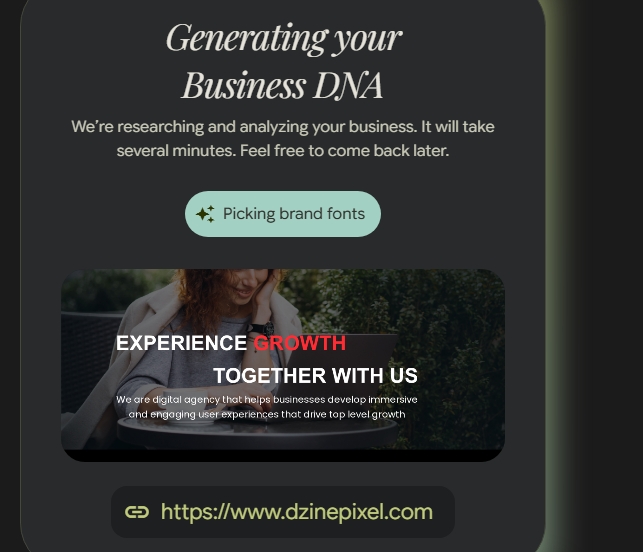
It starts grabbing your brand elements.
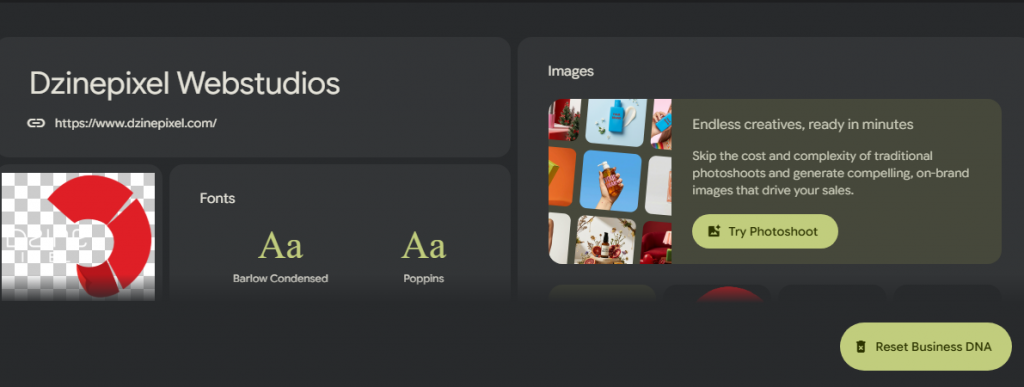
You will be taken to a dashboard. The left side features brand fonts, colour palettes, logo design, tagline, brand values, brand aesthetics, brand tone, and a business overview. On the right side, Pomelli collects images from the website. Now, I noticed a problem. It doesn’t grab all images, but rather some random ones, which I don’t think I can actually work with.
Step 3: Generate campaign assets.
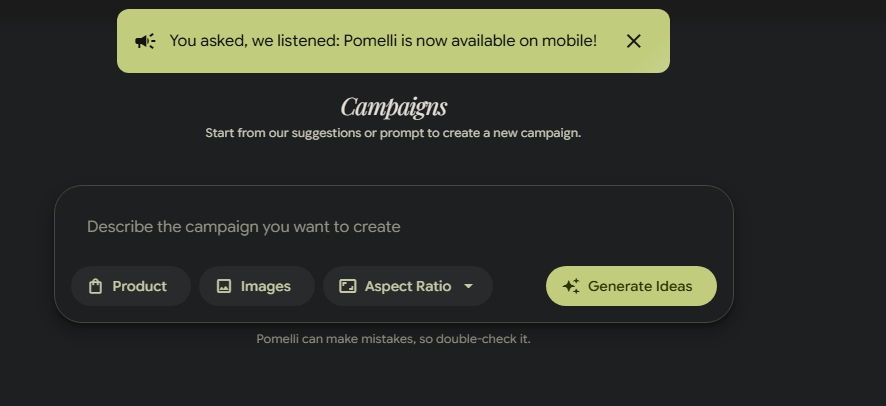
Once the Business DNA is ready, you have two options- go with Pomelli’s recommendations, or write your own prompt.
If you need a product visual, you can upload the image, describe your requirements, select the aspect ratio, and the image usually takes around 2 minutes to generate.
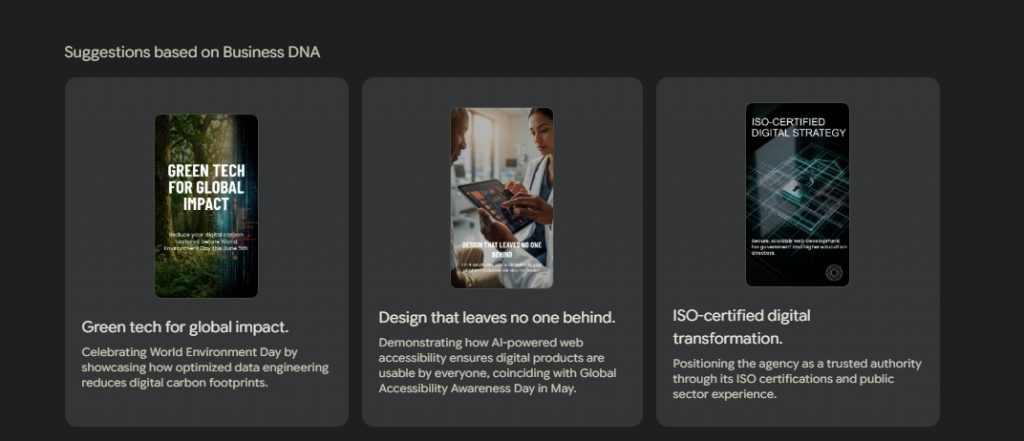
My verdict for Option 1- OK. Not great. The recommendations are nothing spectacular. You could get the same output from any AI tool.
It defaults to the safest, most predictable output, awareness-day content loosely tied to your industry. Green Tech for Global Impact. Design That Leaves No One Behind. ISO-Certified Digital Transformation. Technically on-brand. All of these topics are Completely forgettable.
It may look pretty with some designs, but as a creator, I have been seeing the same recommendations from AI tools for almost since forever. It’s the learning model that need fixing, not the UI (If being honest).
The 2nd option is doing manually, and this is what I can absolutely go for. But again, there are some critical errors they need to fix, or people will just end up wasting time.
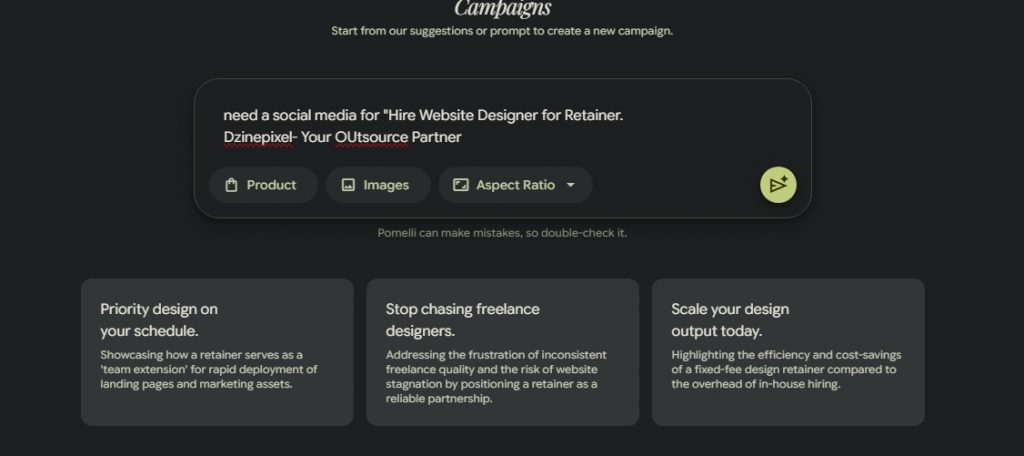
As you can see I clearly add a prompt, and instruct it. The result is below.
So what Pomelli did is pick some random images from the database, slap some random text and give it what one can call, mediocre at best.
And that’s not all. Considering each posts is different thematically, I am pretty sure it doesn’t understand the context and generate 3 images. That’s the biggest gripe I have with AI assistants and tools, they never question you or clarify their doubts like a human. That’s where these tirade of errors starts brewing and the domino falls.
We have been asking for a more sophisticated learning module for a while now, but instead, what they keep doing is luring us with a colourful UI.
The Business DNA Feature: Is It Actually Accurate?
On paper, Pomelli’s Business DNA is impressive. It scans your website, pulls your colour palette, typography, tone of voice & messaging patterns and compiles it into a reusable brand profile without you lifting a finger. Independent testers have clocked voice consistency at around 92% across generated assets. For a tool that does this automatically, those numbers sound great.
But here’s what my live test actually showed.
What Pomelli reads is your website, not your brand. It picks up surface signals such as the words already on your pages, the colours already in your stylesheet, the images in your website (not all images).
Real failure modes to know:
- If your website is minimal or sparse, it will default to a generic corporate tone and call it your brand personality.
- If your site has gone through multiple redesigns or tone shifts over the years, the DNA it extracts will be diluted.
- If you are a technical or B2B brand with layered positioning, Pomelli won’t flag that it needs more context. It will just generate, confidently, and get it subtly wrong and the tool won’t prompt you to correct it.
It cannot read is how you actually speak to a client in a pitch, or the positioning you have built throughout these years. Unfortunately, if we consider the competitive context, these are the factors that actually shapes every content decision you make.
The Business DNA feature is a solid first-pass brand reader. But calling it your brand’s DNA is a stretch. More like, it’s a surface scan.
Pomelli vs Canva vs Adobe Firefly
These three tools are constantly compared but they are not actually competing for the same job.
| Pomelli | Canva AI | Adobe Firefly |
|
|---|---|---|---|
| Best For | Brand-trained campaign generation | Visual design + editing | High-resolution AI image creation |
| Brand Consistency | Automatic via Business DNA | Manual brand kit | Prompt-dependent |
| First Draft Quality | 85% ready | 60% ready (needs editing) | 90% ready (image only) |
| Copy + Visuals Together | ✅ Yes | ❌ Separate tools | ❌ Image only |
| Editing Control | Minimal | Full — 100,000+ templates | Deep, within Adobe suite |
Multi-Brand Support | ❌ One brand at a time | ✅ Multiple brand kits | ✅ Multiple projects |
| Direct Publishing | ❌ Not yet | ✅ Yes | ❌ No |
| Price | Free (Beta) | Free + Pro plan | Subscription-based |
Can Pomelli Replace Canva?
No, and it’s not trying to.
Canva is a design platform. Pomelli is a campaign generation engine. If your team loses the most time staring at a blank slide figuring out what to say — Pomelli solves that. If your bottleneck is producing polished, editable graphics with precise layout control — Canva still wins.
The practical workflow most marketers will land on: use Pomelli to generate the first draft, then take it into Canva or Figma to finish. That hybrid saves 2–3 hours per campaign while not sacrificing design quality.
Who Is Pomelli Actually Built For?
Pomelli is honest about its target user:
- SMB owners and solopreneurs who can’t afford to outsource content creation
- Founders who know their product but can’t design or copywrite
- Freelancers handling a single brand who need volume without burning time
- First-time business owners with no marketing background who need a starting point
What it is not built for (at least right now):
- Agencies managing multiple client brands: no multi-brand workspace, no agency dashboard
- Print or high-resolution campaigns: outputs are web-native only
- Complex B2B or strategic brands: technical positioning needs manual intervention the tool doesn’t prompt
- Regional Indian audiences: Pomelli is English-only. No Hindi, Tamil, Bengali, or other regional or local language support yet.
My Verdict After Testing It Live
Would I recommend it- Yes, but with a clear condition:
New business owners and non-marketers: Use it today. It removes the blank-canvas paralysis and gets you from zero to “good enough to post” faster than anything else that’s free.
Experienced marketers and agencies: Watch it. The infrastructure such as multi-brand support, publishing integration, deeper brand voice customisation is missing. But the direction is exactly right.
Pomelli is the most interesting free tool Google has shipped for marketers in years. It just needs to grow past reading your website and start understanding your brand.
If you already know your brand positioning, Pomelli’s suggestions will feel like a starting point you would never actually use. The tool is best appreciated by someone who doesn’t yet know what to say. If you do know what to say, you will spend more time correcting it than creating.
Tested live from Bhubaneswar, India, April 2026. Written by Ranjeet Nayak, Dzinepixel — a digital branding and web development agency.